
The UK Standard Visitor Visa is the official immigration route that allows individuals to enter the United Kingdom temporarily for tourism, business meetings, family visits, medical treatment, and short study. This uk visit visa application guide covers every stage of the process, from eligibility and documents through to the online application and conditions after approval. Meeting Home Office requirements precisely is the difference between a granted visa and a refusal, and refusals carry no automatic right of appeal.
What are the eligibility criteria for a UK visit visa?
The Standard Visitor Visa permits stays up to six months for a defined range of activities under Appendix V of the Immigration Rules. That strict time limit applies regardless of how many entries you make during the visa’s validity period.
To qualify, you must satisfy UKVI that you are a genuine visitor. Genuine visitor status means you intend to leave the UK at the end of your permitted stay and will not work, claim public funds, or carry out activities outside the visa’s scope. Caseworkers assess this on the balance of persuasive evidence, not a simple checklist.
Permitted activities under Appendix Visitor include:
- Tourism, sightseeing, and leisure travel
- Attending business meetings, conferences, or negotiations
- Short courses of study lasting no longer than six months
- Receiving private medical treatment
- Visiting family or friends settled in the UK
- Transiting through the UK to another destination
Beyond permitted activities, you must also demonstrate:
- Financial self-sufficiency. You must show you can fund your trip and accommodation without recourse to public funds.
- Ties to your home country. Employment, property ownership, tenancy agreements, and family responsibilities all serve as evidence that you will return home.
- A clear purpose for your visit. Vague or inconsistent reasons for travel raise immediate doubts with caseworkers.
What documents does a UK visit visa require?
Strong documentation is the foundation of every successful application. UKVI caseworkers rely on persuasive evidence rather than rigid checklists, and they closely scrutinise financial and personal details for consistency and credibility.
Mandatory documents
Every applicant must submit a valid passport with at least one blank page, a completed online application form, and biometric information collected at a Visa Application Centre. These are non-negotiable requirements.
Financial evidence
Financial documents must cover the last 3–6 months and should include bank statements, payslips, tax returns, or business accounts where relevant. Crucially, declared income must correlate with the funds shown in your account. Unexplained deposits raise immediate doubts and increase refusal risk, so address any anomalies with a clear written explanation before submission.

Evidence of ties to your home country
This category carries significant weight with caseworkers. Useful documents include:
- An employment letter confirming your role, salary, and approved leave
- Tenancy agreements or property deeds in your name
- Evidence of family commitments, such as dependants in your care
- Business registration documents if you are self-employed
Specialist and additional documents
Medical visit applicants should include a letter from a UK-registered specialist confirming the treatment required. Academic visitors benefit from a letter from the UK institution. If you are staying with a UK host, an invitation letter from that person, along with their proof of address and immigration status, strengthens your application considerably.
Pro Tip: Treat your documents as a narrative, not a pile of papers. Each document should directly support a specific claim on your application form. A caseworker reading your file should be able to follow a clear story: who you are, why you are visiting, and why you will return home.
For a full urgent visa documents checklist, including what financial evidence satisfies UKVI requirements, Mnssolicitors has published a detailed breakdown.
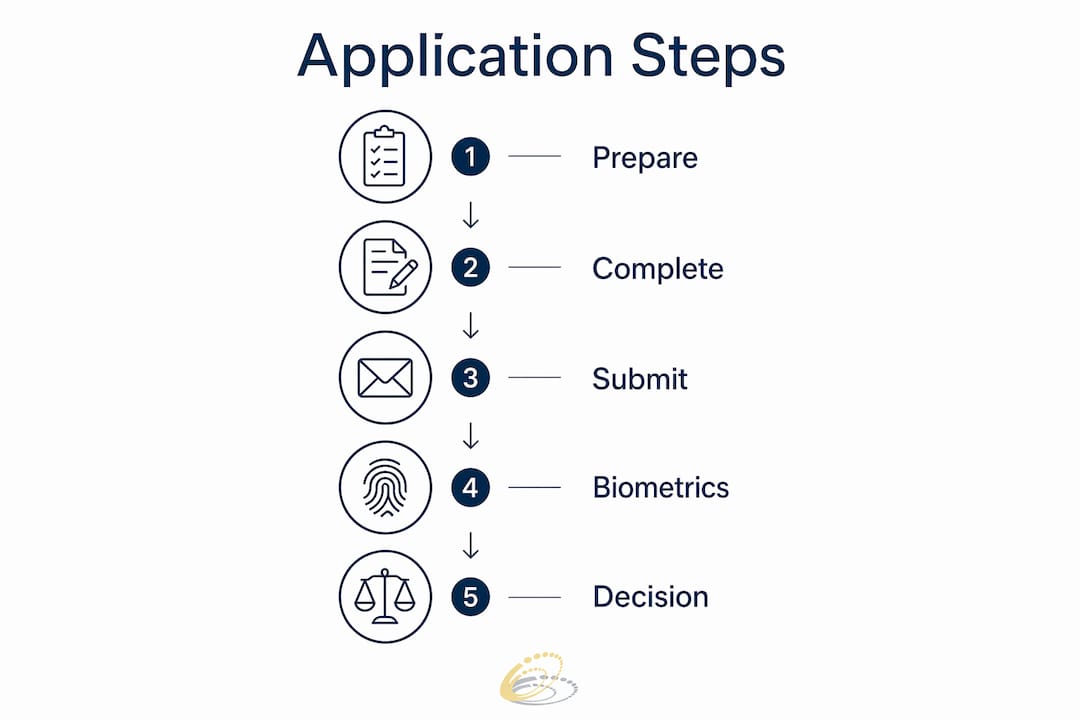
How does the UK visit visa application process work?
The application follows a defined sequence of steps. Completing each stage correctly reduces delays and avoids unnecessary complications.
-
Complete the online application form. Apply through the official UK government portal at gov.uk. You will answer questions about your personal details, travel history, finances, and the purpose of your visit. Accuracy is critical; inconsistencies between your form and your documents are a common refusal trigger.
-
Pay the visa fee. The standard application fee for a UK Standard Visitor Visa is £115. Fees for longer validity visas or specialist visit categories differ, so confirm the correct fee for your specific application type before paying.
-
Book and attend a biometric appointment. After paying, you book an appointment at a Visa Application Centre in your country of residence. At the appointment, your fingerprints and photograph are recorded. Some centres allow document submission at the same appointment; others require online upload in advance.
-
Submit your supporting documents. Upload documents through the online portal or submit them in person at the Visa Application Centre, depending on the service available in your country.
-
Wait for a decision. Processing time is generally within three weeks from your biometric appointment. That timeline can vary by country and application volume.
-
Collect your visa or respond to further requests. If approved, your visa is issued as a vignette sticker in your passport or as a digital status, depending on the processing centre.
Pro Tip: Do not book non-refundable travel before your visa is granted. Processing times vary, and caseworkers do not factor pre-booked costs into their decisions. Wait for confirmation before purchasing flights or accommodation.
Priority and super-priority processing options are available in many countries for an additional fee, reducing the decision timeline significantly. Mnssolicitors offers a fast-track visa service that can prepare applications in as little as 24 hours for applicants facing urgent travel needs.
What are the common reasons for visitor visa refusals?
Refusals follow predictable patterns, and most are avoidable with careful preparation. The top refusal cause is weak, inconsistent, or incomplete evidence regarding genuine visitor intent. Understanding where applications fail is as valuable as knowing what to include.
Common refusal triggers include:
- Vague or unconvincing reasons for the visit with no supporting evidence
- Financial documents that do not match declared income or contain unexplained large deposits
- No credible evidence of ties to the home country, such as employment, property, or family
- Generic documents submitted without linking them to specific claims on the application form
- Booking non-refundable travel before the visa decision is issued
- Inconsistencies between the application form and the documents provided
Visitor visa refusals cannot be appealed or reviewed administratively. The only legal challenge available is a judicial review, which focuses solely on the lawfulness of the decision process, not the merits of the application. Judicial review is costly and narrow in scope. Reapplying with stronger, better-structured evidence is the practical route for most applicants.
For applicants who have already received a refusal, the visa refusal appeal checklist published by Mnssolicitors outlines how to rebuild an application effectively.
What conditions apply during and after your UK visit?
Understanding your visa conditions after approval protects you from breaching immigration rules, which carries serious consequences for future applications.
The key conditions of a Standard Visitor Visa include:
- Maximum stay of six months. You cannot extend a visit visa beyond this limit in normal circumstances. If you need to remain longer, a different visa category applies.
- No recourse to public funds. You cannot claim benefits, use the NHS for non-emergency treatment (unless you have paid the Immigration Health Surcharge), or access other public services.
- No paid or unpaid work. Working for a UK employer, even briefly, breaches your visa conditions. Permitted business activities such as attending meetings are not the same as employment.
- No study beyond the permitted limit. Short courses of up to six months are allowed, but enrolling in a longer programme requires a Student Visa.
Border Force officers at UK ports of entry may question you about your visit. Carry your supporting documents in your hand luggage, not checked baggage. A clear, consistent account of your plans and evidence to back it up resolves most questions quickly. Breaching visa conditions affects your credibility in all future UK visa applications and can result in removal.
Key takeaways
A successful UK Standard Visitor Visa application requires genuine visitor evidence, consistent financial documentation, and clear ties to your home country, all linked directly to your application form.
| Point | Details |
|---|---|
| Genuine visitor evidence | Prove you intend to leave the UK by showing employment, property, or family ties at home. |
| Financial documentation | Provide 3–6 months of bank statements and explain any unusual deposits upfront. |
| Narrative-driven documents | Link every document directly to a specific claim on your application form. |
| Application timing | Wait for your visa decision before booking non-refundable travel. |
| No appeal on refusal | Reapply with stronger evidence; judicial review is the only legal challenge and is rarely practical. |
What I have learned from years of visitor visa applications
The single biggest mistake I see applicants make is treating the visa application as a form-filling exercise. They gather documents, tick boxes, and submit. Then they are surprised when a refusal arrives. The reason is almost always the same: the caseworker could not build a clear picture of who this person is and why they will return home.
The applications that succeed tell a story. The bank statements show stable, consistent income. The employment letter confirms approved leave. The itinerary matches the stated purpose. Every document connects to something on the form. When I review an application and all the pieces fit together logically, I am confident it will succeed.
Timing matters more than most applicants realise. Submitting three months before travel gives you time to respond to any requests for further information without pressure. Submitting two weeks before departure and then booking flights on the same day is a pattern that ends badly. Caseworkers notice rushed, incomplete applications.
If your circumstances are complex, such as self-employment, previous visa refusals, or a gap in your financial history, seek professional advice before submitting. A qualified solicitor reviews your file the way a caseworker will, and identifies weaknesses before they become refusals. That investment is far smaller than the cost of a second application.
— michelle
How Mnssolicitors can support your visitor visa application
Mnssolicitors brings over 27 years of UK immigration experience to every visitor visa case. Every enquiry is handled by a qualified solicitor from the outset, not a trainee, so you receive accurate, reliable advice from the first conversation.
The firm offers document review, full application preparation, and an urgent visa service that can turn around applications in as little as 24 hours for time-sensitive travel. Fixed, transparent pricing means you know the cost before any work begins. With over 170 five-star Google reviews, Mnssolicitors has a proven record of helping applicants present their strongest possible case. Contact the team through the UK visitor visa service page to discuss your application today.
FAQ
What is the standard fee for a UK visitor visa?
The standard application fee for a UK Standard Visitor Visa is £115. Fees for longer validity or specialist visit categories may differ.
How long does a UK visitor visa application take?
Processing time is generally within three weeks from your biometric appointment, though this varies by country and application volume.
Can I appeal a UK visitor visa refusal?
No statutory appeal exists for overseas visitor visa refusals. Judicial review is the only legal challenge available, but it is costly and limited to assessing process lawfulness. Reapplying with stronger evidence is the practical option.
What financial documents do I need for a UK visitor visa?
You need bank statements, payslips, or tax returns covering the last 3–6 months. All funds shown must correlate with your declared income, and any unusual deposits require a written explanation.
What can I not do on a UK Standard Visitor Visa?
You cannot work, claim public funds, or study on a course longer than six months. Breaching these conditions affects all future UK visa applications and may result in removal from the UK.
Leave a Reply