
An exceptional circumstances visa is defined as a legal provision under Appendix FM of the UK Immigration Rules, not a separate visa category, that permits leave to remain when refusal would cause unjustifiably harsh consequences in breach of Article 8 of the European Convention on Human Rights. Applicants who cannot meet standard eligibility criteria may still be granted leave if the Home Office determines that refusing them would disproportionately harm their family life. The threshold is deliberately high, and the evidential burden falls entirely on the applicant. Understanding this provision clearly is the first step towards building a credible application.
What qualifies as exceptional circumstances under UK immigration rules?
“Exceptional” does not mean merely unusual or unique. It means that refusal would result in hardship so severe that it goes beyond the ordinary impact of immigration control, to the point of breaching Article 8 rights. This is a meaningful legal distinction, and many applicants underestimate it.

The Home Office assesses whether the consequences of refusal are unjustifiably harsh for the applicant or their family members. That assessment is fact-specific and depends entirely on the evidence you submit.
Qualifying factors typically include:
- Serious medical conditions that cannot be adequately treated in the country of return, particularly where treatment is unavailable or inaccessible
- Insurmountable obstacles to family life continuing abroad, such as a British partner who cannot reasonably relocate due to caring responsibilities or employment
- Risk of harm in the country of return, including situations where a child or vulnerable adult faces danger
- Severe impact on child welfare, particularly where a child is a British citizen or has lived in the UK for a significant period
- Dependency and care needs where a family member in the UK provides essential support that cannot be replicated elsewhere
The provision is distinct from Leave Outside the Rules on compelling compassionate grounds, which applies a different legal test. Applying under the wrong framework is a common and costly mistake.
Pro Tip: Document every qualifying factor separately and link each one explicitly to the Article 8 right to respect for private and family life. Vague references to hardship will not meet the threshold.
How does the exceptional circumstances provision affect visa outcomes?
Applicants granted leave under the exceptional circumstances provision receive a 10-year route to settlement rather than the standard 5-year route available under Appendix FM partner or parent provisions. That difference matters significantly. A longer route to settlement means more renewal applications, more fees, and more years of compliance before indefinite leave to remain becomes available.
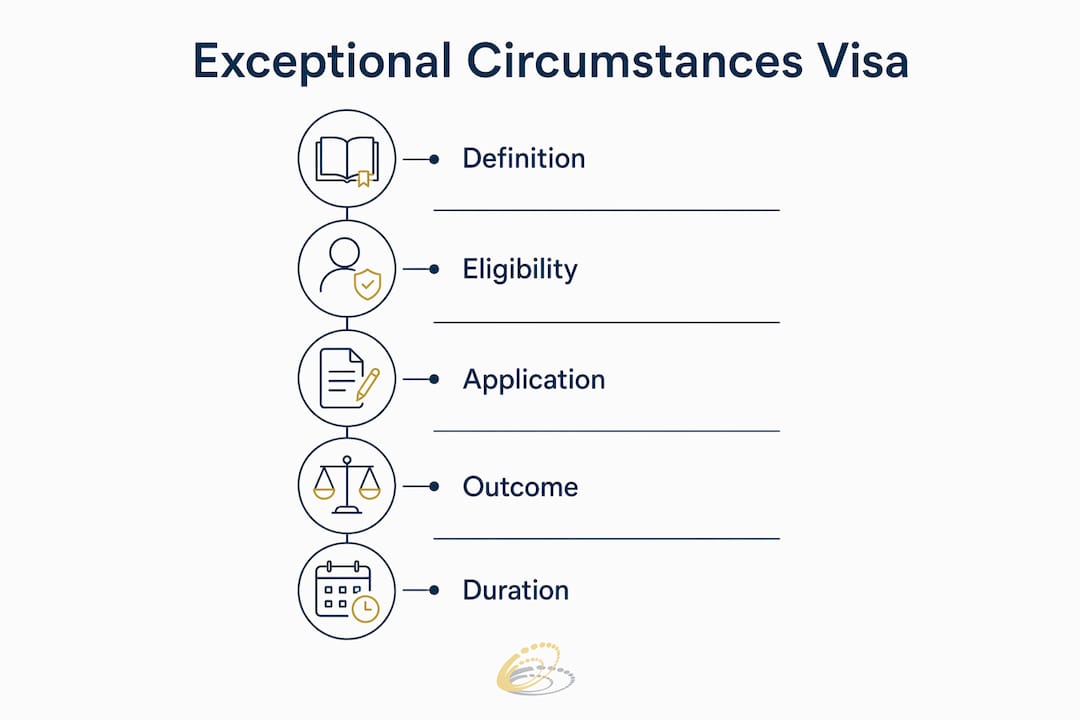
The Home Office conducts a balancing exercise when assessing these claims. It weighs the hardship caused by refusal against the public interest in maintaining immigration control. Neither side automatically wins. The strength of your evidence determines the outcome.
Preparing a credible application requires the following steps:
- Write a detailed cover letter that sets out the legal argument clearly, identifies the Article 8 right engaged, and explains why refusal would cause unjustifiably harsh consequences
- Obtain medical reports from treating clinicians where health conditions are relevant, including prognosis and treatment availability in the country of return
- Gather relationship evidence such as correspondence, photographs, financial records, and witness statements to demonstrate the genuineness and depth of family ties
- Commission expert evidence where appropriate, including country of origin reports, psychological assessments, or social worker reports on child welfare
- Collect educational and financial records to show the impact of removal on children’s schooling, stability, and development
- Address suitability requirements because the exceptional circumstances provision does not waive general suitability criteria, and criminal history or immigration breaches will be considered
Common pitfalls include submitting insufficient evidence, mischaracterising the legal threshold, and failing to address the public interest considerations the Home Office is required to weigh. DIY applications in this area carry serious risks that can result in refusal and, in some cases, removal proceedings.
Pro Tip: Ask a qualified solicitor to review your cover letter before submission. The legal argument must be structured correctly, not just emotionally compelling.
What are the differences between exceptional circumstances and other discretionary routes?
Two discretionary routes are often confused: exceptional circumstances under Article 8 within Appendix FM, and Leave Outside the Rules on compelling compassionate grounds. They are legally distinct, and applying under the wrong one can result in a refusal that could have been avoided.
| Feature | Exceptional circumstances (Appendix FM) | Leave Outside the Rules (LOTR) |
|---|---|---|
| Legal basis | Article 8 ECHR via Appendix FM | Ministerial discretion outside the Rules |
| Legal test | Unjustifiably harsh consequences breaching Article 8 | Compelling compassionate grounds |
| Typical outcome | 10-year route to settlement | Discretionary leave, variable duration |
| Evidential standard | High, structured around human rights law | High, but more flexible in scope |
| When to use | Where family or private life rights are engaged | Where circumstances fall outside any rule entirely |
Exceptional circumstances claims are grounded in human rights law and follow a structured legal framework. LOTR applications are broader in scope but entirely at the Secretary of State’s discretion, with no guaranteed outcome or route. Misapplication of either route wastes time and money, and can damage future applications.
Clear differentiation between these two routes is critical to success. A qualified immigration solicitor will identify which framework applies to your specific facts before any application is prepared.
How to apply for leave based on exceptional circumstances
Applying under the exceptional circumstances provision requires thorough preparation. The burden of proof rests with the applicant, and the Home Office will not make assumptions in your favour.
The following evidence types form the foundation of a credible application:
- A structured legal cover letter that identifies the applicable rule, sets out the facts, and constructs the Article 8 argument step by step
- Medical documentation from treating doctors or specialists, including letters confirming diagnosis, treatment plans, and what would happen if treatment were interrupted
- Country of origin information from recognised sources such as the Foreign, Commonwealth and Development Office or the United Nations High Commissioner for Refugees, where risk of harm is alleged
- Evidence of the child’s life in the UK, including school reports, letters from teachers, GP records, and statements from the child’s social worker if one is involved
- Financial records and tenancy agreements to demonstrate established private life and the disruption removal would cause
- Witness statements from family members, employers, or community figures who can speak to the depth of ties in the UK
Timing is a significant factor. Where a case is urgent, for example where removal directions have been issued or a family member faces a medical crisis, applications must be submitted without delay. Mnssolicitors offers a fast-track service capable of preparing applications in as little as 24 hours for urgent cases.
Legal representation is not optional for most applicants in this category. The complexity of the legal arguments required, combined with the high evidential threshold, means that unrepresented applicants face a substantially higher risk of refusal. A qualified solicitor will also identify whether a genuine and subsisting relationship must be established alongside the exceptional circumstances claim, as this remains a requirement in many partner and spouse applications even where exceptional circumstances are argued.
Key takeaways
The exceptional circumstances provision under Appendix FM is a high-bar legal route that requires structured human rights arguments, comprehensive evidence, and qualified legal support to succeed.
| Point | Details |
|---|---|
| Not a separate visa category | Exceptional circumstances is a provision within Appendix FM, not a standalone visa type. |
| High evidential threshold | Refusal must cause unjustifiably harsh consequences breaching Article 8 rights, not merely hardship. |
| 10-year settlement route | Applicants granted leave under this provision follow a longer route to settlement than standard. |
| Distinct from LOTR | Exceptional circumstances and Leave Outside the Rules are separate routes with different legal tests. |
| Legal representation is critical | DIY applications carry serious risks; a qualified solicitor significantly improves prospects. |
Why I think most exceptional circumstances applications fail before they begin
After working with clients across a wide range of complex immigration cases, the pattern is consistent. Most applications that fail do not fail because the circumstances are insufficiently serious. They fail because the legal argument is never properly constructed.
Applicants often submit compelling personal statements describing genuine hardship. What they do not submit is a structured argument explaining why that hardship meets the legal threshold of unjustifiably harsh consequences under Article 8. The Home Office is not a tribunal of sympathy. It applies a legal test, and the application must answer that test directly.
The second failure point is evidence gaps. A medical condition is not evidenced by a repeat prescription. A child’s connection to the UK is not evidenced by a birth certificate alone. Each claim requires layered, corroborated documentation that leaves no room for doubt.
My honest view is that the exceptional circumstances provision is one of the most misunderstood areas of UK immigration law. Applicants often approach it as a last resort and treat it informally. In reality, it demands the most rigorous preparation of any family visa application. If you are considering this route, get specialist advice before you submit anything. The cost of a refusal, in time, fees, and emotional toll, is far greater than the cost of getting it right the first time.
— michelle
How Mnssolicitors can support your exceptional circumstances case
Exceptional circumstances applications are among the most legally demanding in UK immigration law. Mnssolicitors handles these cases with a qualified solicitor assigned from the first contact, not a trainee or case worker.

Every client receives a clear assessment of whether the exceptional circumstances provision applies to their situation, what evidence is needed, and what the realistic prospects are. Fixed, transparent fees mean you know the cost before work begins. For urgent cases, the fast-track immigration service can prepare and submit applications within 24 hours. With over 170 five-star Google reviews, Mnssolicitors has a proven record in complex family and leave to remain cases across Essex and beyond. Contact Mnssolicitors today for a free initial consultation.
FAQ
What is the exceptional circumstances visa definition in UK law?
The exceptional circumstances provision is defined under Appendix FM of the UK Immigration Rules as a legal basis for granting leave when refusal would cause unjustifiably harsh consequences breaching Article 8 of the European Convention on Human Rights. It is not a separate visa category.
What qualifies for exceptional circumstances visa eligibility?
Qualifying factors include serious medical conditions, insurmountable obstacles to family life abroad, risk of harm on return, and severe impact on a child’s welfare. Each factor must be supported by detailed evidence and linked directly to an Article 8 breach.
How long does leave granted under exceptional circumstances last?
Applicants granted leave under this provision are placed on a 10-year route to settlement, rather than the standard 5-year route available under Appendix FM partner or parent provisions.
How does the exceptional circumstances application process differ from a standard visa?
A standard visa application requires meeting set eligibility criteria. An exceptional circumstances application requires constructing a legal argument that refusal breaches Article 8 rights, supported by medical, expert, and relationship evidence, and assessed through a Home Office balancing exercise.
Do I need a solicitor for an exceptional circumstances application?
Legal representation is strongly recommended. The high burden of proof and the complexity of the Article 8 legal argument mean that unrepresented applicants face a significantly higher risk of refusal.
Leave a Reply