
The UK Standard Visitor visa is the official route for nationals of non-visa-exempt countries who wish to visit the United Kingdom for tourism, family visits, business meetings, or medical treatment. Formerly known under various sub-categories, it now consolidates most short-stay purposes into a single visa type. Following the standard visitor visa UK steps correctly is the difference between a smooth approval and an avoidable refusal. This guide covers eligibility, documentation, the full application process, and the most common mistakes applicants make in 2026.
What are the eligibility criteria for the UK Standard Visitor visa?
The genuine visitor test is the central requirement for any Standard Visitor visa application. UK Visas and Immigration (UKVI) assesses whether your stated purpose is credible, whether you intend to leave the UK at the end of your visit, and whether you can support yourself financially throughout your stay.
Permitted activities under the Standard Visitor visa include tourism, visiting family or friends, attending business meetings or conferences, short-term study of up to 30 days, and receiving private medical treatment. The visa does not permit paid work, accessing public funds, or settling in the UK. Understanding what is permitted work under a visitor visa matters because applications that imply an intention to work are routinely refused.
To meet the eligibility criteria, you must demonstrate:
- A genuine reason for visiting the UK that falls within permitted purposes
- A clear intention to leave the UK before your visa expires
- Sufficient funds to cover your trip without recourse to public funds
- Strong ties to your home country, such as employment, property, or family responsibilities
- No intention to settle, work unlawfully, or abuse the visitor route
Pro Tip: Ties to your home country carry significant weight. A letter from your employer confirming your leave of absence and expected return date is one of the most persuasive documents you can include.
A common misconception is that holding a previous UK visa guarantees approval. UKVI assesses each application on its own merits, and a prior visa does not substitute for current, credible evidence.
What documents and evidence are required?
A valid passport is mandatory for every Standard Visitor visa application. Your passport must be valid for the duration of your intended stay, and you should include any previous passports showing travel history.

Beyond the passport, the documents you submit should build a coherent picture of your visit. GOV.UK is clear that submitting all recommended documents does not guarantee success. What matters is whether the overall evidence supports a credible, genuine application.
The table below summarises the core documents by category:
| Category | Documents to include |
|---|---|
| Identity and travel | Valid passport, previous passports if applicable |
| Purpose of visit | Invitation letter, conference registration, medical referral letter |
| Financial evidence | Bank statements (last 3–6 months), payslips, proof of employment |
| Accommodation and travel | Hotel bookings, return flight itinerary, host’s address details |
| Sponsor support | Sponsor’s bank statements, letter of support, proof of relationship |
| Children under 18 | Birth certificate, parental consent letter if travelling alone |
If someone else is funding your trip, sponsor documentation is required. This includes the sponsor’s bank statements, a signed letter of support, and evidence of their immigration status in the UK. For children under 18 travelling without both parents, a notarised consent letter and proof of the parental relationship are necessary to avoid refusal.
Pro Tip: Do not submit every document you own. A targeted, well-organised bundle is more persuasive than a large, unfocused one. UKVI caseworkers work through high volumes of applications, and clarity counts.
How do you complete the application process step by step?
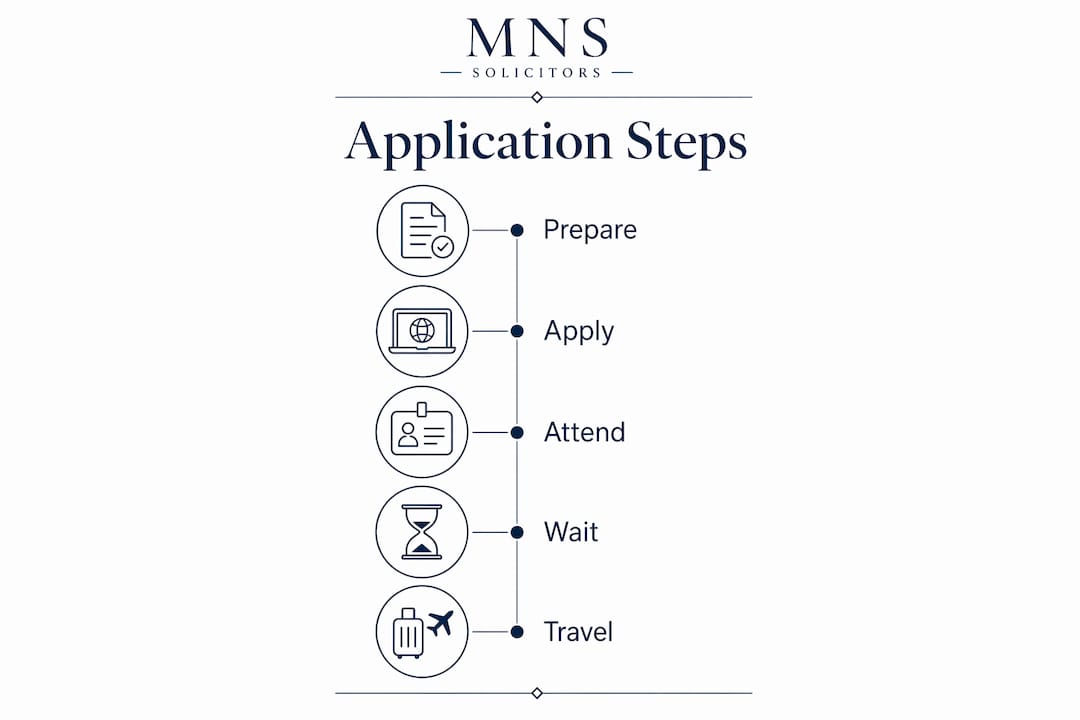
The standard application workflow follows a clear sequence. Each step must be completed in order, and skipping or rushing any stage increases refusal risk.
- Check your eligibility. Confirm your nationality requires a visa and that your purpose falls within permitted activities. Citizens of some countries are visa-exempt for short visits.
- Complete the online application form. Access the application through GOV.UK. You will need to provide personal details, travel history, employment information, and your intended itinerary. Answer every question accurately and consistently.
- Pay the visa fee. The fee for a short visit of up to 6 months increased to £135 from 8 april 2026. Budget for this before you begin, as payment is required to book your biometric appointment.
- Book your biometric appointment. Appointments are made at a Visa Application Centre (VAC) operated by commercial partners such as VFS Global or TLScontact, depending on your country of residence. Availability varies by location, so book early.
- Attend your biometric appointment. Bring your passport and appointment confirmation. Your fingerprints and photograph will be taken. Some VACs offer priority services for an additional fee if you need a faster decision.
- Submit your supporting documents. Depending on your VAC, you may upload documents online or submit them in person. Organise your bundle clearly, with the most important evidence at the front.
- Wait for a decision. Standard processing takes up to 3 weeks, though this varies by country and time of year. Priority and super-priority services are available in some locations for faster outcomes.
- Check your visa vignette. Once approved, check the visa sticker in your passport carefully. Confirm the entry date, expiry date, and number of entries are correct before you travel.
The table below compares the main service tiers available at most VACs:
| Service tier | Typical processing time | Additional cost |
|---|---|---|
| Standard | Up to 3 weeks | Included in visa fee |
| Priority | 5 working days | Varies by country |
| Super priority | Next working day | Varies by country |
Pro Tip: Apply at least 3 months before your intended travel date. This gives you time to gather documents, attend your biometric appointment, and receive a decision without pressure.
What are common pitfalls and how can you increase your chances of approval?
Inconsistencies between your application form, travel plans, and financial evidence are the leading cause of refusals. A caseworker who finds that your stated salary does not match your bank statements, or that your travel dates conflict with your employer’s letter, will question the credibility of your entire application.
The most frequent errors applicants make include:
- Providing vague or generic purpose statements instead of specific, verifiable plans
- Submitting bank statements showing a sudden large deposit immediately before applying
- Failing to demonstrate strong ties to their home country
- Misunderstanding permitted activities, for example attempting to use a visitor visa for paid freelance work
- Omitting sponsor documentation when a third party is covering costs
- Applying too close to the travel date, leaving no time to address issues
Careful preparation and consistency across your application form, supporting documents, and personal narrative significantly improve approval chances. Every document you submit should tell the same story.
UKVI’s decisions focus on credibility of purpose, intent to leave, and financial evidence rather than simply the presence of documents. A coherent, honest application outperforms a bulky, inconsistent one every time.
Pro Tip: If you have previously been refused a UK visa, address the refusal directly in a cover letter. Ignoring a prior refusal without explanation raises immediate concerns for the caseworker reviewing your new application.
Understanding the limits of permitted activities prevents the risk of refusal for implied intent to settle or work unlawfully. If your plans sit in a grey area, such as attending business negotiations that could be interpreted as employment, seek legal advice before applying.
Key takeaways
A successful UK Standard Visitor visa application depends on meeting the genuine visitor test, submitting consistent evidence, and following each procedural step in the correct order.
| Point | Details |
|---|---|
| Genuine visitor test | UKVI assesses credibility of purpose and intent to leave, not just document volume. |
| Fee update for 2026 | The short-stay visitor visa fee increased to £135 from 8 april 2026. |
| Document consistency | Every document must support the same narrative as your application form. |
| Sponsor and minor rules | Sponsor letters and children’s consent documents must be included where applicable. |
| Apply early | Submit your application at least 3 months before travel to allow time for processing. |
What I have learned from watching visitor visa applications succeed and fail
Working with applicants across a wide range of nationalities and circumstances, I have noticed one pattern more than any other. The applications that succeed are not necessarily the ones with the thickest document bundles. They are the ones where every piece of evidence points in the same direction.
Applicants often focus heavily on financial proof, which matters, but underestimate how much weight a caseworker places on the coherence of the overall story. A business traveller whose itinerary lists meetings at a specific company, whose invitation letter confirms those meetings, and whose employer’s letter explains the commercial purpose of the trip will almost always outperform an applicant who submits three months of bank statements and little else.
The 2026 fee increase to £135 has also changed how applicants approach the process. More people are now seeking advice before applying rather than after a refusal, which is the right approach. A refusal is not just a setback. It creates a disclosure obligation on future applications and can affect other visa categories too.
My strongest advice is this: treat the application as a piece of evidence in itself. The form, the documents, and the cover letter should all read as one consistent account of a genuine, temporary visit. If they do not, a caseworker will notice.
— Michelle
How Mnssolicitors can support your visitor visa application
Mnssolicitors specialises in UK visa and immigration law, with every case handled by a qualified solicitor from the first contact. For applicants preparing a visitor visa application, the firm offers document review, application preparation, and legal advice tailored to your specific circumstances.
With a fast-track service that can prepare applications in as little as 24 hours and over 170 five-star Google reviews, Mnssolicitors is well placed to support applicants facing tight timelines or complex situations. Fixed, transparent pricing means you know the cost before any work begins. Whether you are applying for the first time or addressing a previous refusal, Mnssolicitors provides clear, qualified guidance at every stage of the UK visitor visa application process. Contact the team directly to discuss your situation.
FAQ
What is the UK Standard Visitor visa?
The UK Standard Visitor visa is the official visa category for non-visa-exempt nationals visiting the UK for tourism, family visits, business meetings, or medical treatment for up to 6 months.
How much does the UK visitor visa cost in 2026?
The fee for a Standard Visitor visa covering a stay of up to 6 months is £135, following the Home Office fee update effective from 8 april 2026.
What activities are permitted on a Standard Visitor visa?
Permitted activities include tourism, visiting family or friends, attending conferences or business meetings, and short-term study of up to 30 days. Paid work and access to public funds are not permitted.
How long does a UK visitor visa application take to process?
Standard processing takes up to 3 weeks, though priority and super-priority services are available at most Visa Application Centres for applicants who need a faster decision.
What is the most common reason for a UK visitor visa refusal?
Inconsistencies between the application form, financial evidence, and travel plans are the leading cause of refusal. UKVI assesses the totality of circumstances, and a credible, consistent application is the strongest protection against refusal.
Leave a Reply